



Resources / Blog
Why Riyadh's Extreme Heat Damages Roof Waterproofing Faster Than You Think
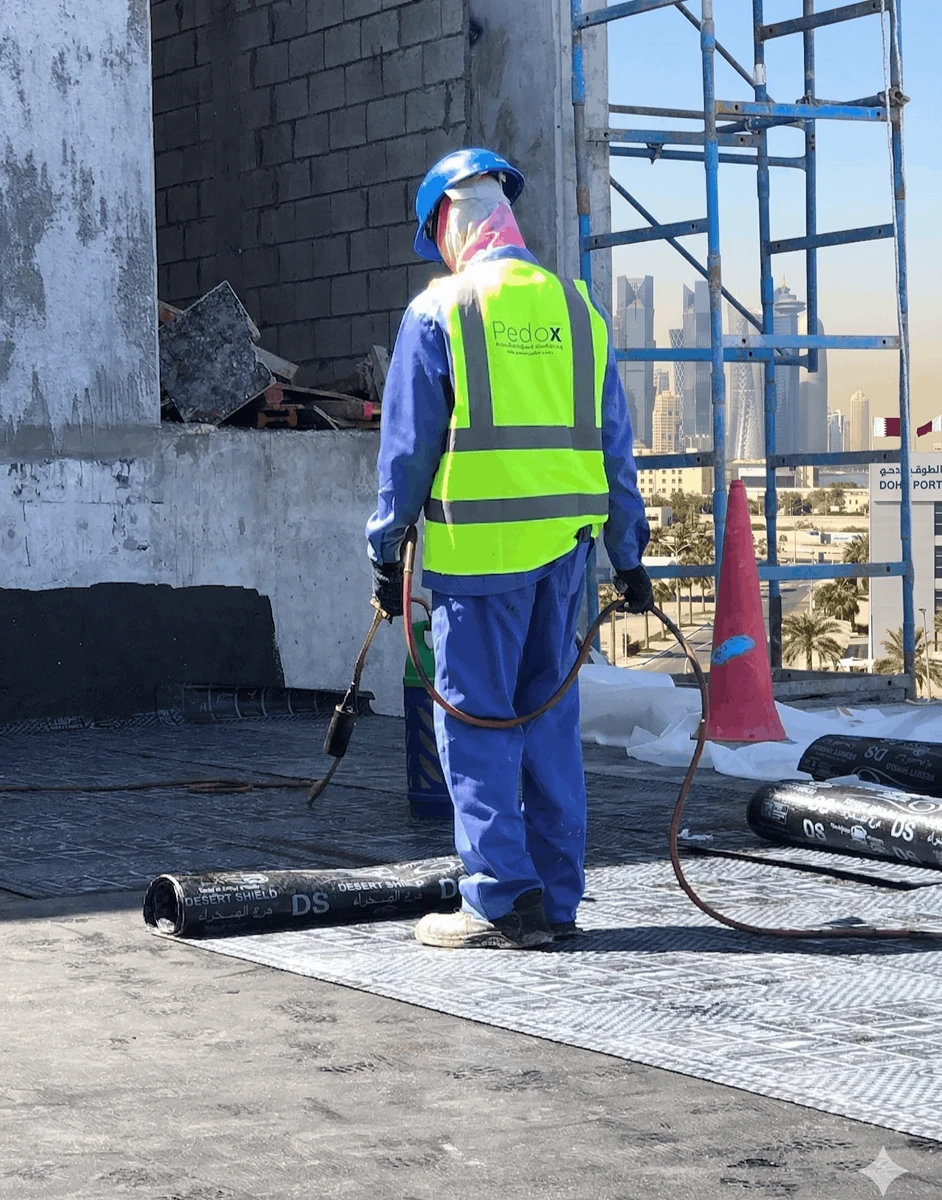
I have walked more roofs in the Gulf than I can count, and Riyadh still surprises people. The membrane looks fine from the ground. No stains on the ceiling. Then one afternoon a chiller overflows, or a short rain hits, and water shows up where nobody expected it. Heat had been working on that roof for years. You just could not see it yet.
Most waterproofing products were proven in climates that never reach what a Riyadh roof sees in July. Surface temperatures on dark or exposed decks can climb well past 70°C during the day, then drop hard at night. That swing is what ages a system faster than rainfall ever will.
The daily heat cycle is harder on membranes than rain
Every day the roof expands. Every night it contracts. Bituminous sheets, liquid membranes, and joint sealants all move with that cycle. The weak spots show up first: penetrations, upstands, expansion joints, and anywhere two different materials meet. If the detailing was rushed or the materials were not compatible, you get hairline cracks. One season becomes five, and those cracks open enough to let water in.
Owners often blame the rain when a leak appears. In Riyadh, rain is usually only the messenger. The damage was already there.
UV does more damage than most people expect
Saudi UV is intense. Leave a membrane without a proper topcoat and it starts to chalk, stiffen, and lose flexibility. Once it turns brittle, normal roof traffic, HVAC vibration, and even light ponding can open a path for water. I have seen roofs that never had a serious storm fail simply because the surface layer had baked for too long.
Dust, blocked drains, and equipment make it worse
Heat alone is enough to age a system. On real projects, it rarely works alone.
- Dust and sand wear down exposed coatings and clog drains, so water sits on the membrane instead of leaving the roof.
- HVAC units, cable trays, and satellite mounts put load and puncture risk exactly where the membrane is already stressed.
- Protective or reflective topcoats that were never maintained leave the main waterproofing layer fully exposed to the sun.
What I tell building owners in Riyadh
Do not wait for a leak. Walk the roof before peak summer and again after a heavy sandstorm season. Look for blistering, open seams, cracked sealant around pipes and AC stands, and water that sits near drains. A short inspection is cheaper than opening ceilings after water has already moved inside.
Sometimes you only need a local repair and a UV-stable topcoat. Sometimes the system is past that point and needs an overlay or a full replacement. The right answer depends on what we find on site, not on a brochure.
At Pedox we specify roof systems for Saudi conditions, including commercial and residential roofs in Riyadh. If you are unsure about your membrane, get it checked while the problem is still small. Heat does not wait for the next budget cycle.